


Particulate Matter 2.5: Health Effects and Effective Protection
What will you learn?
- Where does PM2.5 particulate matter in the air—both outdoors and indoors—come from?
PM2.5 It comes not only from transportation and industry, but also from home heating, biomass combustion, and chemical reactions occurring in the atmosphere. Indoors, its concentration can be increased by cooking, frying, scented candles, fireplaces, tobacco smoke, and poor ventilation, so exposure does not end when you enter your home.
- How should PM2.5 levels in Poland be interpreted in light of WHO recommendations and current limits?
A PM2.5 level that falls within the legal limit does not necessarily mean it is harmless to health, because the recommendations WHO are significantly stricter than the standards in effect in Poland and the EU. The annual legal limit is 20 µg/m³, while the WHO recommends 5 µg/m³; therefore, a reading of 15 µg/m³ still indicates elevated long-term exposure.
- Why is PM2.5 particulate matter harmful not only to the lungs but to the entire body?
PM2.5 It damages the body because it increases oxidative stress and chronic inflammation, not just by mechanically irritating the respiratory tract. Fine particles stimulate the production of ROS, which can damage cells, impair blood vessel function, and increase the risk of heart and lung diseases as well as other systemic complications.
- How can you reduce your daily exposure to PM2.5 particulate matter besides simply using an air purifier?
Daily exposure to PM2.5 It primarily involves planning activities and reducing one’s own sources of pollution. It helps to avoid strenuous activity on busy streets and during rush hour, choose less congested routes, and keep windows closed and use a range hood when outdoor concentrations are high.
PM 2.5 is one of the most dangerous air pollutants because it penetrates deep into the lungs and can affect the entire body. Find out what the current standards are, what research says about its health effects, and how to effectively reduce your daily exposure.
What do you find in the article?
What is PM2.5, and where does it come from in the air?
Dust 2 5, also known as PM2.5, are very fine particles suspended in the air with a diameter of up to 2.5 micrometers. By way of comparison: they are many times smaller than a human hair, which is why they easily bypass the natural filtering mechanisms of the nose and throat. It is precisely this size that prevents them from being stopped in the upper respiratory tract, allowing them to penetrate much deeper.
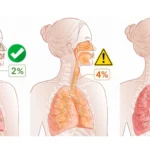
The biggest problem is that PM2.5 can penetrate all the way to the alveoli, which are the final structures responsible for oxygen exchange. Some of the particles and the chemicals associated with them can then enter the bloodstream. In practice, this means that Particulate matter 2.5 does not affect only the lungs, but it can affect the entire body, including the heart, blood vessels, and inflammatory processes.
Why the PM2.5 size matters
In the case of particulate matter, size determines where a particle will settle in the body. Larger particles are more likely to be trapped in the nose or bronchi. PM2.5 is small enough to penetrate deep into the lungs, where it can trigger a more intense biological response. The finer the particle, the more easily it carries heavy metals, organic compounds, and combustion byproducts, which increase oxidative stress and inflammation.
From a health perspective, this has significant practical implications. When you check an air quality app, the message „the air is polluted” alone doesn’t tell the whole story. What matters most is exactly which particle fraction you’re measuring. Particulate matter 2.5 is considered one of the most dangerous, because it does not act superficially. It can trigger processes that develop over a long period of time and do not immediately produce obvious symptoms.
The most common sources of dust outdoors and at home
The sources of PM2.5 are varied, which is why the problem isn't limited to major streets or industrial areas. Outdoors, the most significant sources are the combustion of fossil fuels and biomass, including, among other things, heating homes with coal and wood, emissions from combined heat and power plants, industry, and road transportation. So-called secondary particulate matter also plays an important role; it is not emitted directly but is formed in the atmosphere as a result of chemical reactions involving other pollutants.
In practice, this means that even if you don’t live on a busy thoroughfare, you may still be breathing air with elevated levels of PM2.5. Pollutants travel long distances and accumulate under certain weather conditions, especially in winter, when temperatures are low and winds are light.
At home and in the office, the situation isn't always safe either. The following factors can contribute to an increase in concentration: cooking, frying, baking, scented candles, oil burners, tobacco smoke, or inadequate ventilation. If you also open windows when outdoor concentrations are high, pollutants can easily seep inside. This is an important point: exposure to PM2.5 doesn’t end once you enter your home.
- Outdoor air pollution is primarily caused by emissions from heating, transportation, and industry.
- Inside, the kitchen, combustion, smoke, and poor air filtration are significant factors.
- Some of the dust is formed secondarily in the atmosphere, so its source is not always visible to the naked eye.
PM2.5 Standards in Poland and WHO Recommendations: How to Interpret the Results
When you check PM2.5 readings, it’s easy to fall into the trap of oversimplifying things: if the reading is within the legal limit, then everything is fine. The problem is that Legal limits and recommended levels for health are not the same thing. That is precisely why it is important to distinguish between the formally applicable standard and the level that experts consider to be as safe as possible for the population.
The WHO and Polish and EU Limits
In its 2021 guidelines, the World Health Organization significantly tightened its recommendations. For PM2.5, the recommended annual average was lowered from 10 to 5 µg/m³, and the daily recommendation from 25 to 15 µg/m³. This is not a cosmetic change, but a signal that the previous values were too high from a public health perspective.
Meanwhile, the legal limit for the annual average concentration of PM2.5 in Poland and the EU is 20 µg/m³. The difference is therefore four times the WHO recommendations. If you look at it solely from a legal perspective, you might consider a level of 15 or 18 µg/m³ to be acceptable. However, from an environmental health perspective, this level is still clearly elevated.
It’s also worth remembering that Poland is required to implement a new EU directive on air quality by the end of 2026. This means a gradual tightening of standards for monitoring, public notification, and response to high concentrations, including those of PM2.5. For the individual consumer, the most important takeaway is simple: The current legal minimum should not be regarded as a level that is neutral from a health perspective.
| Indicator | Value |
|---|---|
| WHO Recommendation – Annual Average | 5 µg/m³ |
| WHO Recommendation – Daily Average | 15 µg/m³ |
| Poland and the EU – Annual Limit | 20 µg/m³ |
| Poland – Average Exposure in 2010. | approx. 28 µg/m³ |
| Poland – Average Exposure in 2024. | 15 µg/m³ |
| Poland – average annual concentration in 2025. | 15.4 µg/m³ |
What does a reading of 15 µg/m³ mean in practice?
Result 15 µg/m³ It is sometimes considered „quite good” because it is lower than Poland’s annual limit. However, according to the WHO, this value is already three times higher than the recommended annual average and equal to the maximum daily level. If such a level persists on a regular basis, it is difficult to speak of safe long-term exposure.
The data for Poland show an improvement over the long term. The level, which was approximately 28 µg/m³ in 2010, fell to 15 µg/m³ in 2024, which represents real progress. At the same time, it was noted that 15.4 µg/m³ in 2025, which represents a slight deterioration after years of decline. This is a good example of how the situation is not improving in a linear fashion and remains far from the levels recommended for good health.
In practice, such a reading means it’s a good idea to take protective measures, especially if you’re in a high-risk group or live in an area where high concentrations occur regularly. For a healthy person, exposure may not cause immediate symptoms, but it chronically increases the body’s stress. For a child, a senior, or someone with asthma or heart disease, the effects can be noticeably more rapid.
💡 The WHO has tightened its recommendations: The WHO has lowered the annual reference level for PM2.5 from 10 to 5 µg/m³. This shows that the previous standards were too lenient from a health perspective.
The Health Effects of PM2.5: What the Research Shows
The health effects of PM2.5 are well documented and are not limited to respiratory tract irritation. We are talking about pollution that increases the risk of heart disease, lung disease, lung cancer, and chronic inflammation. It is particularly important to note that damage can accumulate both after brief episodes of high concentration and through daily, seemingly moderate exposure.
In Poland, the scale of the problem is significant. According to data from 2021, air pollution—including PM2.5—was linked to approximately 34,000 additional deaths per year. This isn't just an abstract statistic. Behind this number are specific cases of heart attacks, strokes, COPD exacerbations, respiratory failure, and deterioration in the condition of chronically ill patients.
Respiratory and Cardiovascular Systems
The respiratory system takes the brunt of the impact. PM2.5 irritates the airway epithelium, exacerbates the inflammatory response, and can worsen the course of asthma, chronic bronchitis, or COPD. Some people experience coughing, shortness of breath, wheezing, or a feeling of reduced lung capacity, especially during physical exertion. Even if the symptoms are mild, chronic exposure impairs lung function.
Equally important is the impact on the heart and blood vessels. Fine particles trigger inflammatory processes, impair endothelial function, and may increase blood clotting. Simply put: the body reacts as if it were under constant biological stress. This increases the risk of heart attack, stroke, arrhythmias, and exacerbation of existing cardiovascular diseases.
A Polish study covering 13 cities is of great significance. It showed that even when moderate concentrations of PM2.5 Mortality from cardiovascular and respiratory diseases is on the rise. This is a strong argument against the notion that only very high, „alarming” levels of pollution are harmful.
Who is most at risk from the effects of PM2.5?
Not everyone reacts the same way. Those most at risk are people whose bodies have a lower physiological reserve or who are already dealing with an illness. This applies primarily to children, seniors, and people with chronic heart and respiratory conditions. For them, even a brief deterioration in air quality can lead to worsened symptoms and a higher risk of a visit to the emergency room or hospitalization.
- Children – Their respiratory system is still developing, and their breathing rate is faster than that of adults.
- Seniors – They are more likely to have comorbidities and a lower tolerance for inflammation.
- People with asthma, COPD, and allergies – they experience a worsening of symptoms sooner.
- People with heart disease – are more prone to cardiovascular instability.
- Pregnant women – Long-term exposure is also harmful to fetal development.
If you belong to one of these groups, it’s not worth waiting for obvious symptoms to appear. When it comes to PM2.5, prevention is more effective than reacting after the fact, because some of the effects develop gradually and remain invisible for a long time.
⚠️ There is no safe threshold: Studies show that even moderate levels of PM2.5 increase the risk of death from heart and lung diseases.
How PM2.5 Damages the Body: Oxidative Stress and Inflammation
To understand why PM2.5 is so problematic, it’s worth looking at the mechanism of damage. The mere deposition of particles in the respiratory tract is only the beginning. The key point is that PM2.5 stimulates the body to produce excessive amounts of reactive oxygen species, or so-called. ROS. These are highly chemically active molecules that, when present in excess, damage proteins, lipids, and the genetic material of cells.
This condition is referred to as oxidative stress. Simply put: the body loses the balance between the production of harmful molecules and its ability to neutralize them. If this situation is short-lived, the body usually manages on its own. However, if exposure is frequent, chronic inflammation sets in, which gradually impairs tissue function.
The Role of ROS in the Body's Response
ROS are not inherently harmful. The body uses them, for example, in immune defense. The problem arises when their levels rise too high and persist for too long. PM2.5 works exactly this way: it increases oxidative stress, thereby intensifying processes that damage cells. As a result, the function of the respiratory epithelium deteriorates, tissue permeability increases, and inflammatory mediators are activated.
This explains why the effects of particulate matter are not limited to a single organ. When inflammation and oxidative stress increase, the consequences can also affect blood vessels, the heart, and metabolism. This is precisely why exposure to PM2.5 is associated not only with asthma and coughing, but also with cardiovascular diseases and accelerated health decline in people with chronic illnesses.
What did the experimental studies show?
Experimental studies clearly illustrate this mechanism. In an animal model, exposure to concentrated PM2.5 led to lung damage, excessive mucus production, inflammation, and impaired respiratory function. This is not merely a laboratory curiosity. This set of changes corresponds to what is observed clinically in people exposed to air pollution over a long period of time.
From a preventive health perspective, this means two things. First, it’s a good idea to limit exposure to dust. Second, it makes sense to take steps to help the body cope with oxidative stress and inflammation—as long as these measures do not replace basic protective measures. It is precisely in this context that the topics of air filtration, reducing emission sources, and complementary methods—such as hydrogen inhalation—come into play.
Effective protection against PM2.5 on a daily basis
The most effective strategy is simple in concept: reduce your exposure where you can influence it, while also supporting systemic solutions that improve air quality on a community-wide scale. In practice, most people can make the biggest difference at home, at work, and during their daily outdoor activities.
How to Improve Air Quality at Home and in the Office
Indoors, the following work best: air purifiers with HEPA filters, provided they are properly selected for the size of the space and run regularly. Studies show that such devices can reduce PM2.5 levels in the home by about 35–60% within a few months. This is a real change, not just a marketing gimmick. If you sleep 7–8 hours a day in a bedroom with filtered air, you limit your exposure for a significant portion of the day.
However, it’s not just the device itself that matters, but how you use the room. If you fry food often, use scented candles, or smoke cigarettes, the air purifier will constantly be fighting the pollution you’re creating yourself. So it’s a good idea to reduce indoor sources at the same time. It’s also good practice to turn on the range hood while cooking and to keep windows closed during times when outdoor pollution levels are high.
- Choose an air purifier based on the room's volume, not just the floor area.
- Replace the filters according to the manufacturer's schedule.
- Limit frying, tobacco smoke, candles, and burning anything inside the house.
- Ventilate your home when outdoor temperatures are at their lowest.
How to Reduce Exposure Outside the Home
When you're outdoors, planning is key. If the app shows high PM2.5 levels, limit intense exercise along busy streets and during rush hour. When you’re running, power walking, or biking, you breathe deeper and faster, so more pollutants reach your lungs. Sometimes it’s better to cut your workout short or move it indoors rather than „toughen yourself up” in the smog.
Choosing your route also makes a big difference. The difference between a wide street with heavy traffic and a side street lined with greenery can really be felt. If you commute to work on foot, by bike, or with a child in a stroller, try to avoid the busiest sections. It’s a small change, but when repeated every day, it can significantly reduce your overall exposure.
Why Systemic Measures Matter, Too
Individual protection is necessary, but it will not solve the problem on a population-wide scale. Systemic measures have the greatest impact on health: replacing heat sources, phasing out coal and biomass combustion, developing low-emission transportation, and implementing effective anti-smog policies. It is these measurements that influence the average concentrations nationwide, not just in a single apartment.
The improvement from approximately 28 µg/m³ in 2010 to 15 µg/m³ in 2024 shows that change is possible. On the other hand, the figure of 15.4 µg/m³ in 2025 serves as a reminder that progress can stall or even reverse. Therefore, a sensible strategy is to combine two levels of action: you protect yourself here and now, but at the same time you understand that truly lasting improvement requires changes in infrastructure and regulations.
Hydrogen Inhalation vs. PM2.5: What We Know from Research and Where the Limits Lie
Hydrogen inhalation is increasingly being discussed as a way to support the body when it is exposed to oxidative stress. However, it’s important to be clear about one thing: This is not a substitute for limiting exposure to PM2.5. If the air quality in your area is poor, the key measures remain air filtration, avoiding periods of high pollution, and reducing emission sources. Hydrogen inhalation can be considered as a complementary method.
Why is this topic even being seriously analyzed? Because research indicates that molecular hydrogen may affect ROS levels and markers of inflammation—precisely the areas that are activated by PM2.5. This does not yet constitute full confirmation of clinical efficacy in every situation, but it does justify scientific interest.
Key findings from animal and human studies
In an animal model using rats, hydrogen inhalation was administered following exposure to PM2.5 by 2 hours a day for 4 weeks. Improvements in lung function, reduced inflammation, and lower levels of oxidative stress markers were observed. In addition, the decline in AhR receptor expression—which plays a role in the body’s response to environmental compounds—was inhibited.
There are also promising signs emerging from human studies. A randomized trial conducted in 2024 involving individuals with elevated ROS levels showed that hydrogen inhalation significantly reduced the level of ROS in the blood, with no reported adverse effects. Another clinical trial conducted over 4 weeks showed an improvement in biomarkers of inflammation, a decrease in reactive oxygen species, and beneficial changes in markers of cognitive function in older adults.
These are important findings, but they must be interpreted fairly. They do not yet mean that every person exposed to smog will experience the same effect, nor that we know the ideal timing, dosage, and protocol for use. However, they do point the way: hydrogen may support the body in situations where oxidative and inflammatory stress play a key role.
Why More Clinical Trials Are Needed
At this stage, the most significant limitation is the number and scope of the studies. Larger clinical trials, comparable protocols, and better standardization of concentrations and inhalation duration are needed. Without these, it is difficult to compare results across publications and draw clear conclusions for the general population.
In practice, this means that hydrogen inhalation should be considered supplementary support, rather than a standalone solution to the health effects of smog. If you’re looking for protection against PM2.5, first limit your exposure to the pollution. Only on that foundation do supportive measures make sense and have the right balance.
What to Look for When Choosing a Device
If you're considering a hydrogen inhalation device, pay particular attention to safety, gas quality, and verification of parameters. In this area, marketing claims are not enough. What matters are specific certifications and evaluations that confirm the device’s compliance with technical requirements and the quality control of the manufactured compound.
In practice, it's a good idea to check whether the equipment has certifications such as LVD and EMC, as well as assessments or confirmations from entities such as PCA and PITE. This is especially important if the device is to be used regularly and for health-related purposes. It’s also a good idea to make sure the manufacturer clearly describes how to use the device, its operating parameters, and maintenance guidelines.
The available safety data are promising. In a study in which inhalation was used 2.4% H2 for up to 72 hours, no significant adverse effects were observed in the clinical parameters evaluated. This is a positive sign, but it does not mean we can let our guard down. What matters is the quality of the device, adherence to the instructions, and realistic expectations regarding the results.
✅ Check the equipment's certifications: When inhaling hydrogen, choose devices with safety and quality certifications, such as LVD, EMC, and PCA or PITE certifications.
Frequently Asked Questions
PM2.5 remains one of the most significant environmental health risks, even when levels do not yet exceed legal limits. The most sensible approach is to combine daily protection against exposure with the use of solutions that support the body, but always in moderation and based on data, not promises.
Learn more - Click here: https://anev.com.pl/
Popular Posts
- FiH₂ Instead of ml/min – How to Administer Hydrogen Responsibly in a Clinic

- Responsible supplementation. Not every flow rate corresponds to the same dose—what is FiH₂ in hydrogen inhalation?.
- Hydrogen users: „My asthma has cleared up, and I’m sleeping through the night”
- Research Study at the University of Physical Education in Katowice: Take Part and Test Your Fitness!
- Project: Longevity – 1st Longevity & Anti-Aging Conference for Patients.



 Hydrogen therapy: how to use inhalation for health and vitality?