




PM2.5 Particulate Matter: Effects on Health and Daily Life
What will you learn?
- Why is PM2.5 particulate matter harmful to the entire body, and not just the lungs?
Particulate Matter PM2.5 They are small enough to reach the alveoli, and some of them can enter the bloodstream and trigger reactions throughout the body. This is why their effects are not limited to coughing or shortness of breath, but also include increased strain on the blood vessels, the heart, and the mechanisms responsible for inflammation and oxidative stress.
- How does PM2.5 particulate matter affect respiratory and cardiovascular health?
Exposure to PM2.5 It increases the risk of asthma and COPD exacerbations, impairs respiratory function, and is associated with a higher risk of lung cancer, heart attack, and stroke. This is because fine particulate matter irritates the airways, exacerbates inflammation, impairs vascular function, and may increase the risk of coagulation disorders.
- How does PM2.5 particulate matter affect daily life, education, and work?
Particulate Matter PM2.5 They can impair concentration, memory, exercise tolerance, and overall well-being, so they affect not only health but also learning, work, and daily functioning. In practice, this means poorer learning conditions, increased fatigue, more frequent absences, and measurable health and economic costs.
- What does the research say about hydrogen inhalation in the context of PM2.5 exposure?
Research suggests that hydrogen inhalation may support the body through its anti-inflammatory and antioxidant effects, but it is not a proven treatment for the effects of smog in humans. Data from animal models are promising, and a short-term safety study in healthy adults did not reveal any significant adverse effects; however, the primary focus remains on reducing exposure to PM2.5.
PM2.5 particulate matter is a type of pollution that penetrates deep into the lungs and can affect the heart, the brain, and your daily well-being. In this article, we explain WHO standards, the real health effects, and ways to limit your exposure to PM2.5 on a daily basis.
What do you find in the article?
What Is PM2.5 Particulate Matter, and Why Is It So Dangerous?
PM2.5 particulate matter These are very fine solid and liquid particles present in the air, with a diameter not exceeding 2.5 micrometers. For comparison: this is many times smaller than the diameter of a human hair. In practice, this means that they do not stop solely in the nose or throat, but can bypass the body’s natural protective barriers and penetrate much deeper. That is precisely why this issue is not limited to the smog visible outside the window in winter, but represents a real health burden throughout the year.
The danger stems not only from the mere presence of dust, but also from its size, chemical composition, and ability to penetrate the body. PM2.5 particles may contain, among other things, heavy metals, sulfur and nitrogen compounds, soot, and secondary pollutants formed when exhaust gases react with other components of the air. The smaller the particle, the more easily it reaches the most delicate areas of the lungs. This is precisely why PM2.5 particulate matter is considered one of the most significant environmental problems from a public health perspective.
Why the 2.5 µm threshold matters
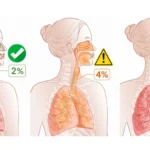
The 2.5 µm threshold is not arbitrary. It is a parameter that helps assess how deeply a given particle can penetrate the respiratory system. Larger particles tend to settle in the upper respiratory tract and are partially removed by mucus and the cilia of the epithelium. PM2.5 particles, however, are small enough to bypass some of these mechanisms. They reach the alveoli—the sites where oxygen and carbon dioxide exchange takes place.
In practice, this means a higher risk of long-term tissue damage. Particles of this size do not necessarily have to cause immediate symptoms to be harmful. You may not feel anything specific on a given day, yet your body still reacts with microinflammation, irritation, and oxidative stress. This is one of the reasons why the PM2.5 problem is so insidious.
How PM2.5 Enters the Lungs and the Bloodstream
After inhalation, the finest particles reach the bronchioles and alveoli. There, they come into direct contact with the very thin barrier separating the air from the blood. Some of the dust remains in the lung tissue and exacerbates local inflammation, but some may enter the bloodstream. This is crucial information because it explains why the effects of exposure are not limited solely to coughing or shortness of breath.
When pollutants enter the bloodstream, the body reacts on a broader scale: the strain on blood vessels, the cardiovascular system, and the mechanisms responsible for inflammatory and antioxidant balance increases. Simply put, particulate matter can trigger reactions throughout the entire body, not just in the lungs. This is why studies link PM2.5 particulate matter not only to respiratory diseases but also to an increased risk of heart attack, stroke, or cognitive decline.
The Most Common Sources of Dust in Our Daily Environment
In everyday life, there are more sources of PM2.5 than is usually assumed. The most commonly cited source is so-called “low-level emissions,” that is, the burning of fuels in home stoves and boilers, especially when using lower-quality fuel. Vehicle exhaust, particularly in busy urban corridors, and industrial emissions also play a major role. Some of the particulate matter is also formed secondarily, already in the atmosphere, as a result of chemical reactions involving other pollutants.
Where and how you spend your day also matters. Living on a busy street, walking during rush hour, exercising near heavy traffic, or airing out your home during a smog episode can increase your exposure to particulate matter. This problem isn’t limited to large cities. During the heating season, high concentrations are also recorded in smaller towns, where emissions from residential heating sources can be particularly high.
Standards for PM2.5: WHO, the EU, and Poland
When discussing air quality, it’s easy to confuse two different concepts: a level that is safer for health i legally permissible level. It’s not the same thing. That’s exactly why many people see the message that the standard hasn’t been exceeded and assume that the air quality isn’t a problem. However, from a health perspective, the situation may be different.
Health Standards vs. Legal Standards
In 2021, the World Health Organization tightened its recommendations and specified that the annual average concentration of PM2.5 should be 5 µg/m³, and the average daily 15 µg/m³. These values are based on current medical and epidemiological knowledge. In other words, they are intended to reflect a level associated with lower health risks, rather than a convenient administrative compromise.
In Poland, the current legal limit for the annual average is 25 µg/m³. That is five times higher than the WHO recommendation. From a regulatory standpoint, therefore, levels may fall within the standard while still being far from the level considered significantly safer for health. This is important when interpreting data from air quality maps and annual reports.
How Have PM2.5 Levels Changed in Poland?
In the long term, an improvement is evident. The average annual concentration of PM2.5 in Poland has fallen from approximately 33 µg/m³ in 2010 to 14.5 µg/m³ in 2023. This is a major change and a sign that regulatory measures, the replacement of heating systems, energy efficiency upgrades, and public awareness are yielding results.
At the same time, the improvement is not linear. According to data for 2025, the average annual concentration rose to 15.4 µg/m³, after the level 14.8 µg/m³ in 2024. This is still significantly lower than it was a dozen or so years ago, but it remains well above the WHO’s recommendations. In practice, this means that PM2.5 particulate matter remains a real health concern, even though the overall trend is more favorable than in the past.
It’s also worth remembering that the national average doesn’t tell the whole story. There are significant differences between regions, cities, and seasons. In winter, brief episodes of very high concentrations can have a significant impact on health, even if the annual average looks better. Therefore, an improvement in overall indicators alone does not mean we can let our guard down when making day-to-day decisions.
What Is Expected to Change by 2026
Stricter national and EU regulations are planned by the end of 2026. The direction is clear: standards are to be brought more in line with current knowledge about health risks. This means greater pressure to reduce emissions from residential heating, transportation, and certain industrial processes, as well as a stronger focus on monitoring and enforcement.
For you, the most important takeaway is simple: even if legal standards are tightened, Health care should not begin only after the limit has been formally exceeded. It is wiser to treat the WHO recommendations as a guideline for planning activities, especially when there are children, seniors, or people with asthma or heart disease at home.
💡 WHO standard vs. Polish limit: The WHO recommends an average of 5 µg/m³ per year, while the Polish legal limit is 25 µg/m³. A legal standard does not imply a level that is harmless to health.
How Does PM2.5 Particulate Matter Affect Health?
The impact of PM2.5 on health is best understood in two dimensions. The first is biological mechanism: Dust causes inflammation, oxidative stress, and impaired cell function. The second is specific clinical effects: more frequent disease flare-ups, reduced respiratory function, and a higher risk of cardiovascular events and cancer. This combination means that the harm does not result solely from a single smog episode, but also from chronic exposure to seemingly moderate concentrations.
Studies show that negative consequences can occur even at levels below the WHO’s previous recommendations. This is an important shift in thinking. It is no longer just about extreme days with smog alerts, but also about long months of exposure to concentrations that have been treated too leniently for years.
Respiratory System: Asthma, COPD, and Lung Cancer
The lungs are the first and most obvious site of exposure to PM2.5. These fine particles irritate the airways, increase mucus production, heighten bronchial reactivity, and impair normal gas exchange. In healthy individuals, this can result in reduced exercise tolerance, shortness of breath, coughing, or a burning sensation in the throat. In people with diagnosed asthma, even a short-term increase in concentrations can trigger a flare-up of symptoms.
With chronic exposure, the risk of developing or worsening [condition] increases COPD, or chronic obstructive pulmonary disease. This is a condition in which airflow through the airways is permanently restricted. Simply put: breathing becomes less and less efficient, and everyday activities begin to require more effort. PM2.5 accelerates this process by sustaining inflammation and damaging the structure of lung tissue.
Particulate matter pollution is also associated with an increased risk of lung cancer. What matters here is both chronic tissue irritation and the presence of substances capable of damaging the genetic material of cells. It is not a simple „breathe in dust and get sick right away” mechanism, but rather a long-term exposure that increases the likelihood of adverse biological changes.
Heart and Blood Vessels: Increased Risk of Heart Attack and Stroke
The fact that PM2.5 particulate matter affects the heart and blood vessels is less intuitive to many people than its impact on the lungs. And yet, it is the cardiovascular system that reacts very strongly to pollution. Once particulate matter enters the bloodstream or triggers a systemic inflammatory response, vascular tone increases, endothelial function deteriorates, and the risk of coagulation disorders rises.
In practice, this translates to a higher risk heart attack, stroke, and exacerbations of circulatory failure. For people with hypertension, atherosclerosis, diabetes, or a history of cardiovascular events, even a temporary decline in air quality can place an additional strain on their health. This is precisely why smog alerts should be of particular interest not only to people with asthma but also to cardiac patients.
It’s worth looking at this from a practical perspective. If you plan to engage in intense outdoor exercise when PM2.5 levels are elevated, you increase lung ventilation—and thus the amount of pollutants you inhale. At the same time, your body works harder, your heart rate increases, and your oxygen demand rises. This combination is not beneficial for your cardiovascular system.
Inflammation, Oxidative Stress, and DNA Damage
To fully understand the scale of the problem, it’s worth clarifying three concepts. Inflammation It is a defensive response of the body that, when chronically activated, begins to damage its own tissues. Oxidative stress refers to an excess of reactive molecules that damage proteins, fats, and cell membranes. DNA Damage These, in turn, are changes in the genetic material of cells that interfere with their proper functioning and repair.
Studies on PM2.5 demonstrate the presence of all these mechanisms. Particulate matter can trigger chronic activation of the immune system, increase the production of free radicals, and impair the body’s ability to repair damage. The result is not only impaired lung function but also an increased risk of systemic changes. This explains why the effects of exposure are widespread across many organs and why it is so important to regularly limit exposure to polluted air.
Who is most affected by PM2.5?
Not every body reacts the same way. There are groups that experience the effects more intensely, more quickly, or more severely in the long term. For them, even moderately elevated levels can have a greater impact than for a healthy adult. If you’re planning to protect your household members, these groups should be your top priority.
Children and the Development of Lung and Cognitive Functions
Children breathe faster than adults, have a lower body weight, and have a respiratory system that is still developing. This makes it relatively easier for them to inhale a higher dose of pollutants per kilogram of body weight. In addition, they spend a lot of time outdoors, often engaging in physical activity, which increases the volume of air they inhale.
Studies link exposure to PM2.5 with impaired lung growth and function, but it also affects cognitive development. In Polish studies, an increase in particulate matter concentrations was associated with a decline in school test scores of approximately 0.07–0.08 standard deviations. This is not an abstract statistical indicator. It represents a real, measurable impact on a student’s concentration, memory, and ability to reach their full potential.
Pregnancy and Fetal Development
During pregnancy, the body operates in a unique way. Any factors that exacerbate inflammation and oxidative stress may have a greater impact than usual. This is precisely why pregnant women are considered a high-risk group. Exposure to PM2.5 is being studied for its impact on the intrauterine environment and fetal development.
This isn’t about causing unnecessary anxiety, but about managing risk sensibly. If you’re pregnant and live in an area with poor air quality, it’s especially important to take daily preventive measures: monitor air quality levels, limit your time near heavy traffic, and plan when to ventilate your home more effectively. Simple lifestyle adjustments can reduce your exposure without requiring a major lifestyle overhaul.
Seniors and people with chronic conditions
Older adults are more likely to have comorbidities such as hypertension, atherosclerosis, heart failure, diabetes, COPD, or asthma. Their bodies also have a lower functional reserve, meaning they are less able to cope with additional stress. As a result, elevated PM2.5 levels are more likely to lead to hospitalizations, disease exacerbations, and a decline in physical function.
The same applies to younger people with chronic health conditions. If you have asthma, coronary artery disease, or simply have a lower tolerance for air pollution, it’s a good idea to take action sooner than the average person. Don’t wait for very high alerts; instead, limit your exposure as soon as levels approach those considered high-risk by the WHO.
PM2.5 in Everyday Life: Education, Work, and Health Costs
The effects of air pollution go beyond medical statistics. PM2.5 also affects how you learn, work, exercise, and function on a daily basis. The problem, therefore, has not only health implications but also economic and social ones. It’s worth looking at this from a broader perspective, because then it’s easier to justify adopting protective habits in your daily life.
Concentration, Memory, and Academic Performance
Poorer air quality can lead to reduced concentration, decreased cognitive performance, and increased fatigue. For children and adolescents, the impact on learning conditions is particularly significant. The aforementioned Polish study showing a decline in exam scores by 0.07–0.08 standard deviations at higher PM2.5 levels clearly illustrate that this is not merely a matter of discomfort.
If a student lives on a busy street, walks to school along major thoroughfares, and returns from practice during rush hour, their daily exposure may be significantly higher than the citywide average alone would suggest. This is an important consideration when choosing a route, activity times, and how to ventilate a home or classroom.
Medical costs and lost productivity
The World Bank estimated the health costs associated with PM2.5 in Poland at tens of billions of zlotys a year. This figure includes hospitalizations, treatment of chronic diseases, absenteeism, reduced productivity, and the consequences of premature deaths. This illustrates the scale of the problem from a systemic perspective.
From an individual’s perspective, the cost is also real, though less dramatic. More frequent infections and flare-ups of symptoms, reduced exercise tolerance, lower work efficiency, greater fatigue after a walk or workout, and the need to change family plans on smoggy days—all of these factors affect quality of life. PM2.5 particulate matter is therefore not just a topic for environmental reports. It is a factor that can alter daily life more than it initially appears.
✅ First, check the air quality map: Before going for a walk or working out, check the PM2.5 levels in the app. If concentrations are high, choose a shorter route or exercise at home.
How to Limit Exposure to PM2.5 in Your Daily Life
It’s usually not possible to completely avoid exposure, but you can significantly reduce it. It’s not a single „brilliant” trick that makes the biggest difference, but rather a set of simple decisions made on a regular basis. This is especially important when levels approach 15 µg/m³ or exceed them, because the WHO identifies this threshold as significant for the daily average.
How to Read Air Quality Alerts
First, check not only the color of the alert, but also the specific PM2.5 value and its trend over time. If the level is low in the morning but is expected to rise sharply in the evening, it’s better to plan walks, shopping trips, or children’s activities in advance. In practice, apps and maps showing hourly concentrations and daily averages are helpful.
It’s also important to distinguish between a situation that is „formally safe” and one that is „better for your health.” A day on which the Polish annual standard isn’t exceeded says nothing about whether it’s a good idea to go for a run right now along a busy street. Current readings and WHO recommendations are more useful for planning your day than legal standards alone.
Home: Air Purifier, Ventilation, and Filters
At home, the most effective way to limit exposure is often air purifier with a HEPA filter. This type of filter captures very fine particles, so the air in a bedroom or a child’s room can be noticeably better than the air outside. However, it’s not just the purchase of the unit that matters, but also its performance relative to the room size, proper placement, and regular filter replacement.
It’s best to plan on ventilating your home when outdoor pollution levels are lower. During the heating season, midday is often a better time than late evening, but this depends on local conditions. If you live on a busy street, a good solution may be to ventilate briefly and intensively rather than leaving the window ajar for many hours.
Filters in ventilation systems and ensuring that windows are airtight can also be helpful, though the goal isn’t to completely cut off the supply of fresh air. The aim is to manage air exchange sensibly, not to create a sealed capsule. If there are people with allergies, children, or seniors in the home, the benefits of better filtration are usually particularly noticeable.
Outdoors: walking, working out, and commuting
Outdoors, the key is to limit exposure to the most polluted air, not to give up outdoor activity entirely. Walking away from main streets usually means lower exposure than walking on the sidewalk along a congested thoroughfare. The same goes for commuting: a route that’s 5 minutes longer but has less traffic may be a wiser choice.
When PM2.5 levels are high, it’s a good idea to reduce the intensity of your exercise or move it indoors. Interval running, fast cycling, or intense outdoor workouts cause a significant increase in lung ventilation. This means that along with oxygen, you’re simply inhaling more particulate matter. For families with children, seniors, and people with chronic conditions, it’s wise to postpone such activities until a better time of day.
- For families with children: Check PM2.5 levels in the morning and afternoon, choose playgrounds away from main streets, and air out your apartment when the readings are lower.
- For seniors: Limit long walks when your levels are high, keep the medications prescribed by your doctor within reach, and consider using an air purifier in your bedroom.
- For active people: When PM2.5 levels are high, opt for a lighter workout, a shorter route, or an indoor activity.
- For people with asthma and COPD: Take action early, before you experience obvious discomfort, because a flare-up often begins with seemingly minor symptoms.
Hydrogen Inhalation and PM2.5: What the Research Says
The topic of hydrogen in the context of PM2.5 exposure is attracting growing interest, but it requires a calm and thorough analysis. The most important thing is to distinguish between a promising area of research a a proven treatment for the effects of smog on humans. Current data suggest potential benefits, particularly in the areas of oxidative stress and inflammation, but do not justify making sweeping therapeutic claims.
What did studies in animal models show?
In animal model studies, hydrogen inhalation has been shown to have a protective effect on lungs exposed to high concentrations of PM2.5. Among other things, the following effects have been reported:. reducing lung tissue damage, limiting inflammation, decreasing excessive mucus production, and reducing oxidative markers. This is an important finding because it reveals a biological mechanism that may also be relevant to future research on humans.
However, we must keep things in perspective. Animal models allow us to study the mechanism of action and the body’s basic responses, but they do not provide an automatic answer as to how strong and predictable the effect will be in humans living under different conditions, with different diseases, and at different exposure levels. This is a valuable stage, but it is still preliminary.
Anti-inflammatory and antioxidant effects
Systematic reviews and analyses of studies indicate that hydrogen inhalation may reduce inflammatory cytokines—proteins that drive the inflammatory response—and lower markers of oxidative stress. Simply put, this means potential support for the body in areas where PM2.5 causes some of the most significant biological damage.
This mechanism of action is consistent with the hypothesis that hydrogen can play a complementary role in situations involving oxidative stress. In the context of smog, however, it is important to remember that even the best biological support does not negate the exposure itself. If you inhale a lot of pollutants every day, the key remains limiting your exposure to particulate matter, rather than seeking a single substitute solution.
Safety and Limitations of Current Research
In a study involving healthy adults, inhalation 2.41 TP3T of hydrogen over a period of up to 72 hours It did not show any significant adverse effects on lung function, cardiovascular parameters, or neurological parameters. This is valuable information regarding short-term safety under controlled conditions.
At the same time, there are significant limitations. First, some of the data comes from preclinical studies and therefore cannot be automatically applied to everyday practice. Second, safety studies are not the same as efficacy studies for treating the effects of smog. Third, even if this approach shows promise, it does not mean that hydrogen inhalation can replace treatment for chronic diseases, a visit to the doctor, or basic protective measures such as air purification and limiting exposure.
The most reasonable conclusion, therefore, is that hydrogen can be regarded as potential supplementary support in the context of inflammatory and oxidative processes, but not as a proven solution to the problem of PM2.5 particulate matter in humans. If you are considering this approach, it is important to proceed sensibly, without overestimating the available data and without neglecting the fundamentals of prevention.
⚠️ Hydrogen is not a substitute for protection: Research on hydrogen inhalation is promising, but largely in the preclinical stage. It is a supportive measure, not a substitute for treatment or exposure reduction.
Frequently Asked Questions
What is PM2.5 particulate matter?
These are very fine particles with a diameter of up to 2.5 µm. They are small enough to penetrate deep into the lungs, and some may enter the bloodstream and affect the heart, blood vessels, or brain.
What level of PM2.5 is considered safe?
Since 2021, the WHO has recommended an annual average of 5 µg/m³ and a daily average of 15 µg/m³. The Polish legal limit for the annual average is 25 µg/m³, which is five times higher. Therefore, staying within the legal limit does not necessarily mean there is no risk.
Is air quality improving in Poland?
Yes, but it still does not meet the levels recommended by the WHO. The annual average PM2.5 level fell from about 33 µg/m³ in 2010 to 14.5 µg/m³ in 2023, but rose to 15.4 µg/m³ in 2025. This represents a long-term improvement, albeit with significant fluctuations.
Who should be most careful about PM2.5 particulate matter?
Children, pregnant women, older adults, and people with asthma, COPD, and heart disease are most at risk. In children, PM2.5 can impair lung development and cognitive function, and in older adults, it can increase the risk of hospitalization and exacerbations of chronic diseases.
How can you reduce your exposure to PM2.5 on a daily basis?
It’s a good idea to check PM2.5 levels before going for a walk or working out, limit intense physical activity when there’s smog, and choose less busy routes. At home, a HEPA-filter air purifier and ventilating the space when concentrations are lower can help. On days when air quality alerts are in effect, take special care to protect children and seniors.
Do hydrogen inhalations help with the effects of smog?
The studies are promising, but they must be interpreted with caution. In animal models, hydrogen reduced inflammation and oxidative stress following exposure to PM2.5, and a study involving 2.4% of hydrogen administered for up to 72 hours in healthy adults showed no significant adverse effects. However, this is supportive evidence rather than a confirmed treatment for the effects of smog in humans.
PM2.5 is an issue that brings together the environment, health, and everyday decisions. The better you understand the difference between legal standards and actual health risks, the easier it will be to take sensible protective measures for yourself and your loved ones. The most effective approach combines monitoring air quality, limiting exposure, and calmly evaluating the available methods to support your health.
If you want to learn more click here: https://anev.com.pl/
Popular Posts
- FiH₂ Instead of ml/min – How to Administer Hydrogen Responsibly in a Clinic

- Responsible supplementation. Not every flow rate corresponds to the same dose—what is FiH₂ in hydrogen inhalation?.
- Hydrogen users: „My asthma has cleared up, and I’m sleeping through the night”
- Research Study at the University of Physical Education in Katowice: Take Part and Test Your Fitness!
- Project: Longevity – 1st Longevity & Anti-Aging Conference for Patients.



 Distilled water 5l - why should you have it at home?